

Reading time: 3 min
Uploaded on: June 6, 2025
ADHD is a neurological condition that affects your brain, causing symptoms like:
- difficulty concentrating
- inattention
- and hyperactivity.
Ulcerative colitis (UC) is a chronic, autoimmune disease that causes inflammation in the inner lining of the intestine and rectum, leading to symptoms like:
- abdominal pain
- rectal bleeding
- and weight loss.
One study found that people with ADHD were 2.31 times more likely to have UC than those without ADHD.1 However, in another study, the risk of ADHD in UC patients was only 1.05 times higher.[2]
Still, the findings suggest there might be a link between ADHD and colitis, possibly because of shared genes or environmental influences.[1]
Genetic predisposition
Some research shows that ADHD and autoimmune diseases, like UC, often run in the same families.[3] One study even found that having UC can increase your chances of getting ADHD.[4] This suggests there may be a shared genetic factor.
One possible link is a group of genes called human leukocyte antigen (HLA). These genes help control the immune system. Problems with HLA have been linked to ADHD and autoimmune conditions.[5] But the connection between HLA and UC seems to be stronger[6] than its link to ADHD.[5]
There also seem to be gender differences. Females with ADHD are more likely to develop UC.[7] This could relate to X and Y chromosomes. Some genes associated with both conditions are more common on the X chromosome. Other genes that increase ADHD risk but lower UC risk may be more common on the Y chromosome (which only males have).[7]
In short, genes may help explain why ADHD and UC often appear together—but more research is needed to fully understand this link.

Immune dysregulation
Immune dysregulation could be a shared factor in the development of ADHD and UC.
UC is an autoimmune disease, whereas ADHD isn't. Yet people with ADHD are likely to have higher levels of inflammation than those without, and the immune system could be involved in this.[8]
Additionally, ADHD has been linked to other auto-immune diseases, like asthma, psoriasis and eczema,[3] which suggests a possible link between ADHD and the immune system.
Gut-brain axis
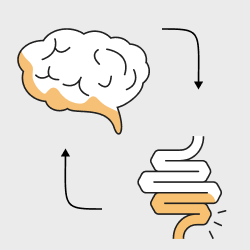
This is the name given to the communication channel between the brain and the gut. It influences digestion, brain functions and mood. Many factors affect the gut-brain axis, including:
- The gut microbiome, a collective name for the microorganisms that live in your digestive system.
An altered microbiome can worsen symptoms for both conditions, causing digestive and mental health issues.
- Neurotransmitters directly influence the gut and brain. Neurotransmitters like serotonin are mostly made in your gut.
An altered gut-brain axis could disrupt this process, which may lead to mood disorders[9] and make ADHD worse. [10]
Research says that changes in your gut microbiome can play a role in both ADHD and UC.[11][12]
When the gut becomes inflamed from UC, it can affect how the brain works and increase the risk of ADHD. On the flip side, ADHD-related factors like stress and gut issues can increase the risk of UC.
This suggests that the gut microbiome contributes to and is affected by these conditions.

Stress and inflammation
Stress can worsen the symptoms of both ADHD and UC.
People with ADHD often show stronger reactions to stress. Stress can also trigger flare-ups in UC patients by increasing inflammation, which affects the gut-brain axis and worsens digestive issues.
Additionally, maternal stress during pregnancy may increase the risk of UC [13] and worsen ADHD symptoms.[14]
Back to:
Read next:
How ADHD and UC symptoms overlap
References:
Chen, H., et al. (2013). Comorbidity of Allergic and Autoimmune Diseases Among Patients With ADHD. Journal of Attention Disorders.
Yang, X., et al. (2023). Causal atlas between inflammatory bowel disease and mental disorders: A bi-directional 2-sample Mendelian randomization study. Frontiers in Immunology, 14, 1267834.
Hegvik, T., et al. (2022). Familial co-aggregation of attention-deficit/hyperactivity disorder and autoimmune diseases: A cohort study based on Swedish population-wide registers. International Journal of Epidemiology, 51(3), 898-909.
Yang, X., et al. (2023). Causal atlas between inflammatory bowel disease and mental disorders: A bi-directional 2-sample Mendelian randomization study. Frontiers in Immunology, 14, 1267834.
Nudel, R., et al. (2019). Immunity and mental illness: Findings from a Danish population-based immunogenetic study of seven psychiatric and neurodevelopmental disorders. European Journal of Human Genetics, 27(9), 1445-1455.
Degenhardt, F., et al. (2021). Transethnic analysis of the human leukocyte antigen region for ulcerative colitis reveals not only shared but also ethnicity-specific disease associations. Human Molecular Genetics, 30(5), 356-369.
Hegvik, A., et al. (2017). Associations between attention-deficit/hyperactivity disorder and autoimmune diseases are modified by sex: A population-based cross-sectional study. European Child & Adolescent Psychiatry, 27(5), 663.
Du, J., et al. (2025). Exploring the complex relationship between attention deficit hyperactivity disorder and the immune system: A bidirectional Mendelian randomization analysis. Journal of Affective Disorders, 369, 854-860.
Mhanna, A., et al. (2023). The correlation between gut microbiota and both neurotransmitters and mental disorders: A narrative review. Medicine, 103(5), e37114.
Cickovski, T., et al. (2023). Attention Deficit Hyperactivity Disorder (ADHD) and the gut microbiome: An ecological perspective. PLOS ONE, 18(8), e0273890.
Checa-Ros, A., et al. (2021). Current Evidence on the Role of the Gut Microbiome in ADHD Pathophysiology and Therapeutic Implications. Nutrients, 13(1), 249.
Khan, I., et al. (2019). Alteration of Gut Microbiota in Inflammatory Bowel Disease (IBD): Cause or Consequence? IBD Treatment Targeting the Gut Microbiome. Pathogens, 8(3), 126.
Sun, Y., et al. (2021). Prenatal Maternal Stress Exacerbates Experimental Colitis of Offspring in Adulthood. Frontiers in Immunology, 12, 700995.
Grizenko, N., et al. (2008). Relation of maternal stress during pregnancy to symptom severity and response to treatment in children with ADHD. Journal of Psychiatry & Neuroscience : JPN, 33(1), 10.
Reading time: 3 min
Uploaded on: June 6, 2025