
Reading time: 3 minutes min
Uploaded on: January 27, 2026
- ADHD makes it harder to sleep due to racing thoughts, restlessness, and poor routines.
- Brain chemicals like dopamine are off balance, making it tough to fall and stay asleep.
- Body clocks in ADHD are often out of sync, leading to feeling sleepy at odd times.
- Some prescribed ADHD treatments may cause sleep issues at first, but long-term, the sleeping problems tend to settle.
H2: Insomnia: a brief overview
Insomnia is a sleep disorder that makes falling or staying asleep hard.[2] It’s usually caused by stress, medicine, depression, underlying conditions, or environmental factors, such as feeling too hot or having an uncomfortable bed.
The symptoms can vary for each person, but it’s generally characterised by difficulty falling asleep. Other common symptoms may include:
- Waking up frequently at night
- Waking up earlier than you want
- Feeling tired even after sleeping
- Feeling irritable during the day
- Finding it hard to concentrate during the day
Insomnia can be categorised into two main types: [2]
- Acute or short-term insomnia, which lasts less than three months.
- Chronic or long-term insomnia, which lasts more than three months.
The treatments for insomnia can vary depending on the type. Generally, your doctor will recommend practising good sleep hygiene, but medication may be necessary if that doesn't help.
Why is insomnia more common in people with ADHD?
Sleep disorders, including insomnia are more common in children than adults, possibly due to hyperactivity and difficulty maintaining routines.[1]
The subtype of ADHD can also influence different sleep disorders. For example, those with combined-type ADHD are more prone to sleep disturbances, while individuals with the hyperactive subtype are more likely to experience insomnia.[5]
But what's the connection? Below, we’ve discussed some possible factors.
The technical stuff
TLDR: Imbalances in dopamine and norepinephrine levels characterise ADHD, and these imbalances can disrupt sleep regulation and lead to sleep-related issues.
Here’s the science in greater detail:
Neurotransmitter imbalances
Neurotransmitter (chemical messengers that signal the brain) imbalances are common in people with ADHD. Often, ADHD causes low dopamine and norepinephrine levels.[6]
Dopamine and norepinephrine play a key role in sleeping and waking up, and their levels naturally fluctuate throughout the day. (They’re higher during the day to promote alertness and focus, and lower in the evening to help you unwind.)
People with ADHD often have dopamine dysregulation, which can throw off this balance.
Low dopamine and norepinephrine levels during the day can increase daytime sleepiness, and make it difficult to focus or concentrate.[6]
Dopamine and norepinephrine dysregulation at night can affect impulse control and attention regulation, which can make it harder to fall asleep.
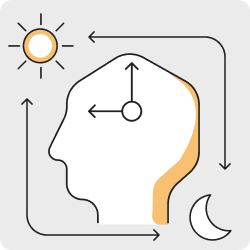
H4: Dysregulated circadian rhythm
Your circadian rhythm is the natural biological clock that helps regulate your sleep-wake cycle. People with ADHD are more likely to have a dysregulated circadian rhythm.
One possible reason for this is a dopamine imbalance. When dopamine is low, melatonin (the sleep hormone) increases.[8] ADHD can often cause low dopamine levels during the day. This can increase melatonin levels, which can make you feel sleepy.

Restless leg syndrome
Restless legs syndrome (RLS) is a condition that causes an overwhelming urge to move your legs, with symptoms being particularly notable at night, where they can disrupt sleep.
Research shows that RLS is quite common in people with ADHD, especially in children with hyperactive symptoms.[5] This could be another potential cause of sleep disturbances in people with ADHD.[4]
Changes in how dopamine works in the brain are one of the primary causes of RLS. It affects the brain's ability to control muscles, leading to involuntary leg movements.
Dopamine imbalances are also related to ADHD, so it’s possible that this can be a factor in both conditions.

ADHD medication and sleep problems
Certain medications used to manage ADHD symptoms work by supporting brain chemicals like dopamine and norepinephrine. But they can cause sleep issues in some people.
Short-term studies showed that people taking these medications did get sleep issues.[15]
However, a 2-year-long study found that taking ADHD medication caused no more sleep issues than not taking medication at all. This suggests that, contrary to short-term studies, ADHD medication might not worsen sleep issues over the long-term. [10]
So while certain ADHD medications may initially cause sleep issues, these problems won’t necessarily worsen or persist. Your body may adjust to the medication and stabilise your circadian rhythm over time.
Underlying conditions
People with ADHD are more likely to have conditions like depression, anxiety,[11] or RLS, which may contribute to sleep problems.
Psychiatric conditions, such as depression, anxiety and bipolar disorder, can increase feelings of hopelessness, sadness, and worry, making it more challenging to fall and stay asleep. They can also cause an imbalance of serotonin and dopamine, both of which are crucial for your sleep-wake cycle.
Difficulties with sleep hygiene
Sleep hygiene is the habits you form to improve your sleep. This can include avoiding screens close to bedtime, reducing caffeine intake, or meditating to help you unwind.
ADHD can make it harder to maintain consistent sleep routines, which makes it difficult to relax and regulate your circadian rhythm.
Those with the hyperactive subtype may also experience racing thoughts and an overactive mind as bedtime approaches. This can make it challenging to unwind and fall asleep.
Back to:
Next:
References:
- Wajszilber, D., Santiseban, J. A., & Gruber, R. (2018). Sleep disorders in patients with ADHD: Impact and management challenges. Nature and Science of Sleep, 10, 453.
- NHS (2024). Insomnia. NHS.
- NHS Derbyshire Healthcare (n.d.). Understanding ADHD & Sleep: Presentation by the Neurodevelopmental Team. https://www.derbyshirehealthcareft.nhs.uk/.
- Fadeuilhe, C., et al. (2021). Insomnia Disorder in Adult Attention-Deficit/Hyperactivity Disorder Patients: Clinical, Comorbidity, and Treatment Correlates. Frontiers in Psychiatry, 12, 663889.
- Hvolby, A. (2014). Associations of sleep disturbance with ADHD: Implications for treatment. Attention Deficit and Hyperactivity Disorders, 7(1), 1.
- Shen, C., et al. (2020). What Is the Link Between Attention-Deficit/Hyperactivity Disorder and Sleep Disturbance? A Multimodal Examination of Longitudinal Relationships and Brain Structure Using Large-Scale Population-Based Cohorts. Biological Psychiatry, 88(6), 459.
- Kooij, J.S. and Bijlenga, D. (2013). The circadian rhythm in adult attention-deficit/hyperactivity disorder: current state of affairs. Expert Review of Neurotherapeutics, 13(10), pp.1107–1116.
- Luvone, P., & Gan, J. (1995). Functional interaction of melatonin receptors and D1 dopamine receptors in cultured chick retinal neurons. The Journal of Neuroscience, 15(3), 2179.
- Stein, M.A., Weiss, M. and Hlavaty, L. (2012). ADHD Treatments, Sleep, and Sleep Problems: Complex Associations. Neurotherapeutics, 9(3), pp.509–517.
- Häge, A., et al. (2024).
Reading time: 3 minutes min
Uploaded on: January 27, 2026